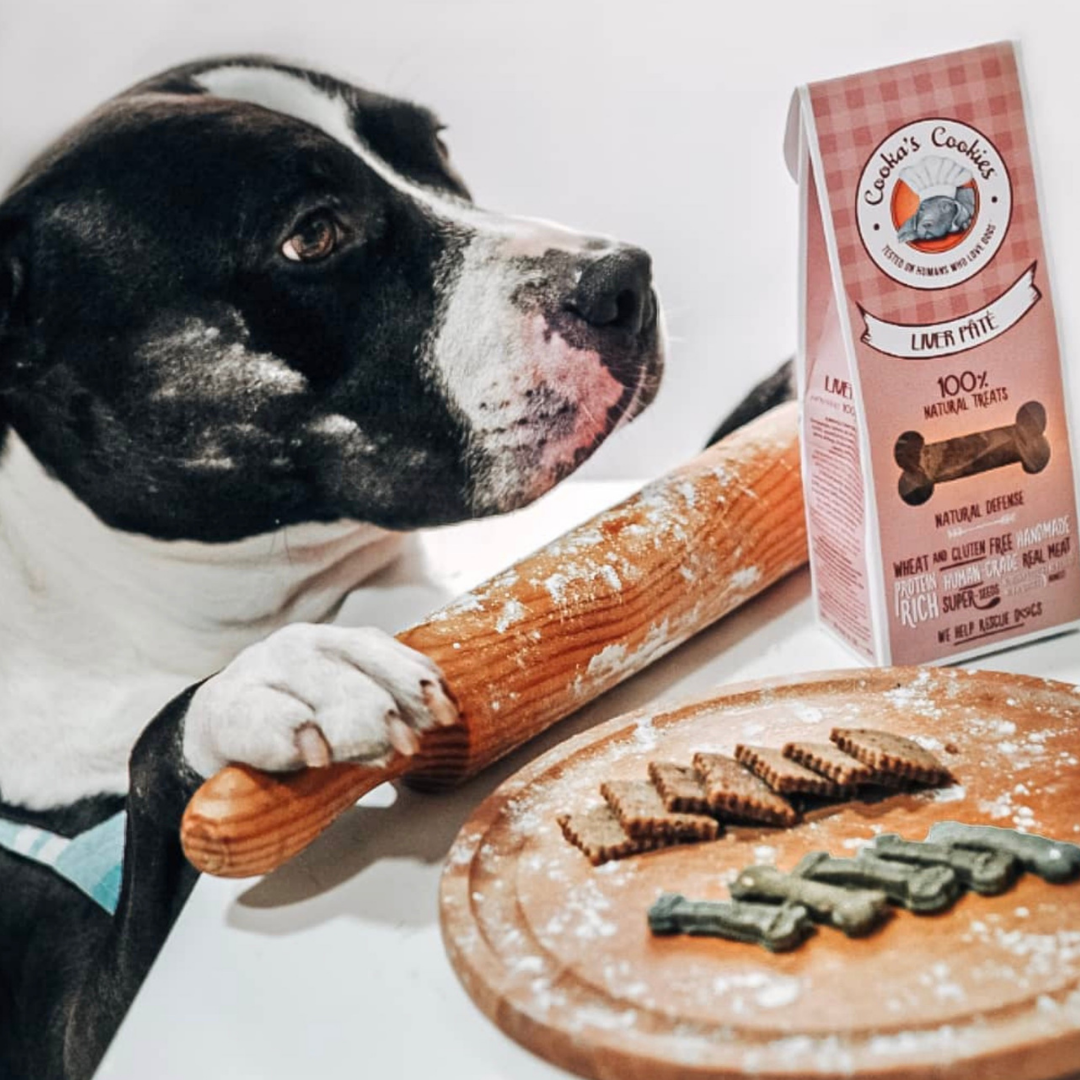

Walk into any pet shop or scroll through a dog treats website and you'll see the words 'natural' and 'high-quality' everywhere. But here's the thing — two treats can both be made from a single ingredient, carry no artificial additives, and still deliver very different nutritional value to your dog. The reason? How they're made.
The production method behind a treat has a significant impact on how much protein, fat, and beneficial nutrients survive from the raw ingredient to the finished product your dog actually eats. Understanding the difference between air-drying, baking, and freeze-drying isn't just for the label-obsessed — it's practical knowledge that helps you choose the right treat for training sessions, dental work, or everyday enrichment.
How Baking Works — And What It Does to Nutrition
Baking is the oldest and most familiar processing method. Raw ingredients are mixed, shaped, and placed into an oven at high temperatures — typically anywhere from 160°C to over 200°C — for a sustained period. Think of it like cooking your dog's treats in the same way you'd bake a biscuit.
The result is a firm, crunchy texture that most dogs enjoy, and a product with a long shelf life thanks to very low moisture content. From a manufacturing perspective, baking is efficient, consistent, and relatively inexpensive — which is part of why it's so common.
The nutritional trade-off, however, is real. High heat degrades heat-sensitive vitamins — particularly B vitamins and vitamin C — as well as certain enzymes and some amino acids. The longer and hotter the bake, the more degradation occurs. Proteins are denatured, which isn't necessarily harmful, but it does change the bioavailability of some nutrients.
Baked treats are still a perfectly fine option — especially for dogs who enjoy a satisfying crunch, or as a lower-calorie snack — but if you're choosing treats specifically for their nutritional contribution, baking isn't the method that preserves the most from the original ingredient.
How Air-Drying Works — The Middle Ground Worth Understanding
Air-drying removes moisture from raw ingredients using carefully controlled low heat and airflow over an extended period — often 12 to 24 hours or longer depending on the ingredient. The temperatures used are significantly lower than baking, typically below 70°C, and sometimes much lower than that.
This slower, gentler process means that far more of the original nutritional content survives intact. Proteins remain in a more natural state, naturally occurring fats are preserved, and heat-sensitive vitamins and enzymes are much less likely to be destroyed. The end result is a treat that's nutritionally closer to the raw ingredient than a baked equivalent made from the same meat.
Texture-wise, air-dried treats sit somewhere between raw and baked. They're typically soft enough to break apart easily — which makes them excellent for training, where you need to deliver rewards quickly and in small pieces — while still having enough substance that dogs find them genuinely satisfying.
From a practical standpoint, air-dried treats also tend to be intensely aromatic, which matters during dog training. The smell is a significant part of what captures your dog's attention and motivates them to work. If you've ever noticed your dog responding faster to certain treats than others, aroma is usually a big part of why.
How Freeze-Drying Works — Maximum Retention, Higher Cost
Freeze-drying is the most technically involved of the three methods. Raw ingredients are first frozen solid, then placed in a vacuum chamber where the pressure is reduced dramatically. At low pressure, the frozen water in the ingredient converts directly from ice to vapour — a process called sublimation — without ever passing through a liquid state.
The result is a product that retains the nutritional profile of the raw ingredient with remarkable fidelity. Because no heat is used at any stage, heat-sensitive vitamins, enzymes, amino acids, and naturally occurring probiotics survive almost entirely. Freeze-dried treats are as nutritionally close to raw feeding as a shelf-stable product can get.
The trade-off is cost. Freeze-drying equipment is expensive, the process is slow, and the energy requirements are high — all of which is reflected in the price per gram. Freeze-dried treats also tend to be lighter and more fragile than air-dried alternatives.
For dogs on raw or species-appropriate diets, or for owners who want to use treats as a genuine nutritional supplement rather than just a reward, freeze-dried options represent the gold standard. For everyday dog training where you're going through significant treat volume, the cost can add up quickly.
Side-by-Side: What the Numbers Actually Look Like
It's difficult to give precise universal figures because nutritional content varies by ingredient, but the general pattern across studies and manufacturer data is consistent:
- Baked treats: highest heat exposure, most vitamin and enzyme degradation, lowest moisture, long shelf life
- Air-dried treats: moderate heat, significantly better nutrient retention than baking, moderate moisture removal, excellent shelf life
- Freeze-dried treats: no heat, maximum nutrient retention, very low moisture, longest shelf life when sealed — highest cost
Protein content by dry weight tends to be high across all three methods, but the bioavailability — how readily your dog's body can actually use that protein — is generally better in air-dried and freeze-dried products.
What This Means When You're Reading a Treat Label
Most treat labels will tell you the crude protein and fat percentages, but they won't tell you which method was used or how much nutritional degradation occurred during processing. This is where knowing the method matters.
If a treat is described as 'air-dried' or 'freeze-dried', that's a meaningful signal about the care taken in production. If it just says 'baked' or 'oven-roasted', it's likely a perfectly acceptable treat — but you shouldn't assume it carries the same nutritional density as an air-dried equivalent made from the same ingredient.
Single-ingredient treats are generally the clearest indicator of quality regardless of method — if the only ingredient listed is chicken, beef lung, or fish skin, you know exactly what you're giving your dog. Once you add fillers, binders, and flavourings, the label becomes much harder to interpret.
When Each Type Has Its Place
Baked Treats
Good for: everyday snacking, dental crunch, low-calorie rewards between training sessions, dogs who enjoy texture variety.
Air-Dried Treats
Good for: training sessions where you need high motivation and fast delivery, dogs with sensitive digestion, owners who want nutritional quality without freeze-dried pricing, everyday use where volume matters.
Freeze-Dried Treats
Good for: dogs on raw or biologically appropriate diets, high-value reward situations where you need maximum motivation, owners supplementing nutrition through treats, occasional use as a premium reward.
Building a Treat Routine That Works
Most experienced dog owners — and most professional trainers — don't use a single type of treat for every situation. A good treat rotation typically includes a lower-value everyday option for calm moments and basic reinforcement, a medium-value training treat for regular sessions, and a high-value option held in reserve for the moments that really count: a solid recall at the park, a difficult stay, or a new skill being cemented.
Understanding the difference between air-dried, baked, and freeze-dried helps you build that rotation deliberately, rather than just grabbing whatever's on the shelf. If you want your dog focused and working hard for your next training session, reaching for an air-dried treat with a strong aroma is likely to get you further than a baked biscuit — regardless of how 'natural' both products claim to be.
Try Cooka's Cookies Beef Puffs (€5.20) — single-ingredient air-dried beef lung, 69% crude protein, just 1.4% fat — the training treat serious dog owners reach for before a demanding session. For variety, Cooka's Cookies Tuna Nuggets (€6.35) deliver air-dried tuna and cod rich in omega-3. For a natural dental chew alongside nutritional value, the Mr. Bones Duck Neck (€3.95) is a naturally air-dried chew for medium and large dogs. Browse the full range at Dogs-shop.ie.
Frequently Asked Questions
Is air-dried better than baked for dogs?
Generally, yes — from a nutritional standpoint. Air-drying uses lower temperatures than baking, which means more vitamins, enzymes, and natural protein structure survive the process. That said, baked dog treats are still a perfectly safe and enjoyable option. The best choice depends on what you're using the treat for: training, snacking, or supplementing nutrition.
Are freeze-dried treats worth the extra cost?
For occasional use as a high-value reward, or for dogs on raw diets, freeze-dried treats can be worth it. For everyday dog training where you're going through large quantities, air-dried treats deliver excellent quality at a more sustainable price point. Most owners use freeze-dried treats strategically rather than as a daily staple.
Can I find quality air-dried dog treats in Ireland?
Yes. Dogs Shop Ireland, based in Rathangan, Co. Kildare, stocks a curated range of air-dried single-ingredient natural dog treats with delivery across Ireland — serving dog owners in Dublin, Cork, Galway, Limerick, Waterford, Kilkenny, Sligo, Drogheda, Naas, Navan, Ennis and Tralee. Visit dogs-shop.ie to browse the full range.
What's the difference between air-dried and dehydrated dog treats?
The terms are often used interchangeably, but air-drying typically refers to a slightly more controlled process with careful temperature and airflow management. Both aim to remove moisture at low temperatures to preserve nutrition. The key is the temperature used — anything below around 70°C is generally considered to retain significantly more nutritional value than standard baking.
How do I know if a treat is truly single-ingredient?
Check the ingredients list on the packaging — it should list one item only, such as 'beef lung' or 'salmon skin'. If you see preservatives, binders, flavourings, or multiple protein sources listed, it's a multi-ingredient product. Single-ingredient treats are the easiest way to know exactly what your dog is eating, particularly useful for dogs with food sensitivities.
Proudly serving dog owners across Dublin, Kildare, Meath, Wicklow, Cork and all of Ireland from our Rathangan shop, with fast nationwide delivery. Visit dogs-shop.ie.