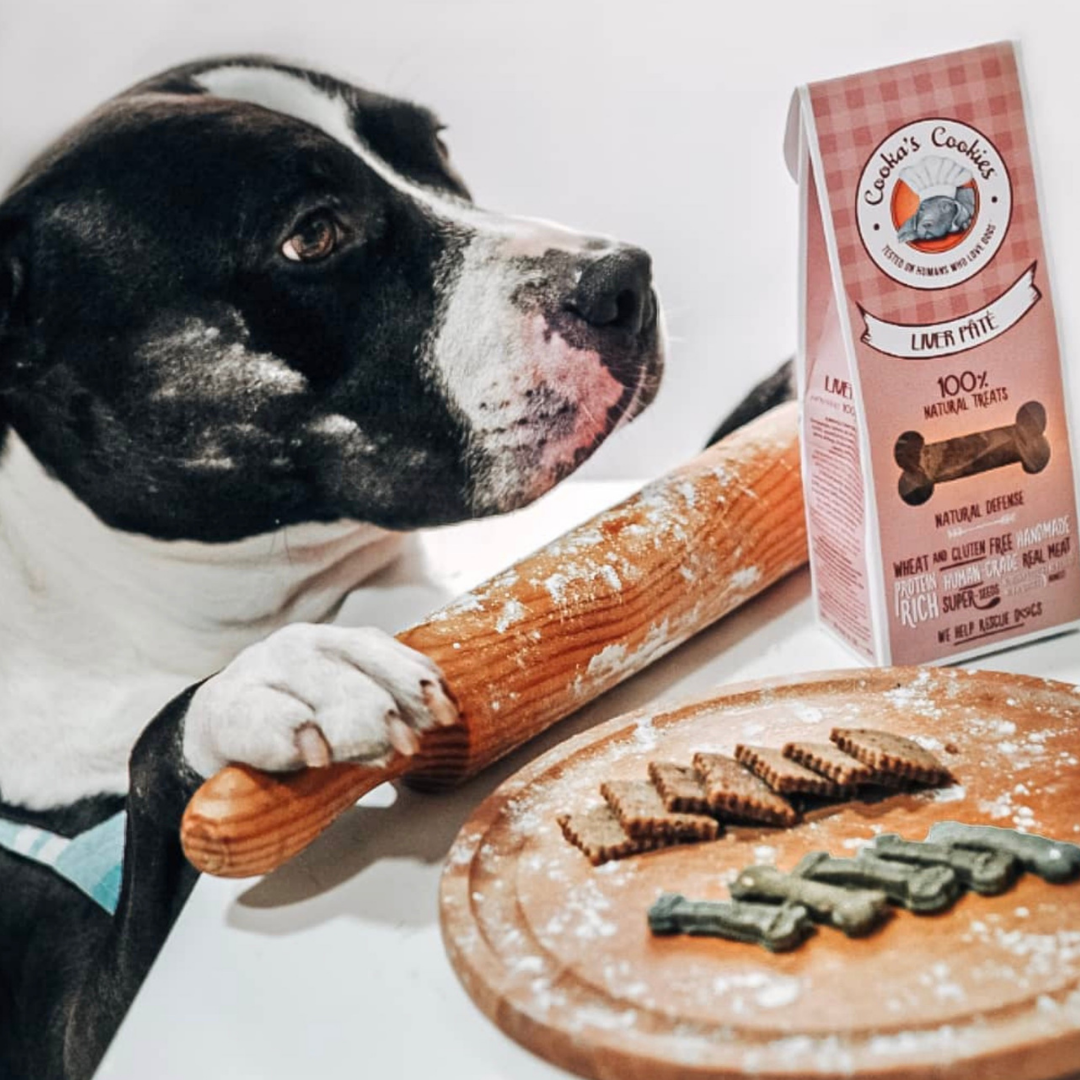

Food sensitivities in dogs are more common than most owners realise — and dog treats are one of the most frequently overlooked triggers. A dog can be on a carefully selected hypoallergenic diet and still react, because their training treats, dental chews, or reward biscuits contain exactly the ingredients the diet was trying to avoid. If your dog has food sensitivities, understanding how to choose the right treats is as important as understanding what to feed.
This guide covers what food allergies in dogs actually are, how treats cause problems, what 'hypoallergenic' means on a label — and what it doesn't — and how to choose hypoallergenic dog treats that genuinely work for a sensitive dog.
How to Know If Treats Are Making Your Dog's Allergies Worse
The challenge with identifying treat-related sensitivities is that the symptoms are identical to food allergy symptoms from any source — and treats are given less frequently and in smaller volumes than meals, making the connection harder to spot.
Signs that treats may be contributing to your dog's symptoms include:
- Itching, scratching, or licking paws that is worse after training sessions or treat-heavy days
- Recurring ear infections or inflammation
- Intermittent loose stools or digestive upset that doesn't correlate consistently with main meals
- Facial rubbing or around-the-eye irritation following treat use
- Redness or hot spots that flare unpredictably
If symptoms fluctuate in a way that doesn't track neatly to meal changes alone, treats are worth investigating. The simplest test is a strict 2–4 week treat pause — using only the foods from the elimination diet as rewards — to see if symptoms improve.
Common Food Allergens in Dog Treats
Dog food allergens are specific proteins that trigger an immune response. The most common culprits are:
- Beef: the most frequently identified allergen in dogs — partly because it has historically been the most common protein in commercial dog food and treats across Ireland and the UK
- Chicken: the second most common allergen, and ubiquitous in commercial treats
- Dairy products: including milk derivatives used in some treat formulations
- Wheat and other grains: a common binder in commercial biscuit-style treats
- Artificial additives: colourings, preservatives, and flavour enhancers that can trigger inflammatory responses in sensitive dogs
A dog must have been exposed to an ingredient before developing an allergy to it. The proteins a dog has eaten most — usually chicken and beef because they're in most commercial foods — are the ones they're most likely to develop sensitivity to over time. This is why novel proteins are so useful in managing food sensitivities.
What 'Hypoallergenic' Actually Means on a Label
The term 'hypoallergenic' is used loosely across the pet food industry and has no strict regulatory definition in Ireland or the EU for dog treats. In the commercial treat market, 'hypoallergenic' usually means the product avoids the most common allergens — typically no wheat, no beef, no dairy, no artificial additives. This is a useful starting point but it's not a guarantee. A product labelled hypoallergenic may still contain chicken, which is the second most common dog allergen.
The practical lesson: don't rely on the label. Read the ingredient list. If the product is single-ingredient — just turkey, just fish, just lamb — you know exactly what protein you're introducing and can manage the allergy trial accordingly.
Novel Proteins: Why Turkey, Fish, and Duck Are Safer Choices
For dogs with known sensitivities to beef and chicken — the two most common allergens — switching to novel proteins is the most effective strategy for treat selection. A novel protein is one the individual dog has not previously encountered in their diet.
Turkey is genuinely less common in commercial pet food than chicken, making it a novel protein dog treat for many dogs. It's mild, well-tolerated, and highly palatable. Air-dried turkey chunks offer all the practical benefits of a training treat for dogs with a protein source that sidesteps the most common sensitivity triggers.
Fish — particularly tuna and cod — is a novel protein for the majority of dogs, since fish is less prevalent in mainstream commercial diets. It also brings the added benefit of omega-3 fatty acids, which have anti-inflammatory properties that may actually help reduce the overall allergic burden in sensitive dogs over time.
Duck is similarly novel for many dogs and has a palatability profile that most dogs respond to enthusiastically. It appears less frequently in mainstream treats than chicken, making it a useful rotation option for dogs on restricted diets.
Single-Ingredient vs. Multi-Ingredient Treats: Simpler Is Better
For dogs with food sensitivities, single-ingredient dog treats are almost always the better choice. The reason is straightforward: every additional ingredient is a potential trigger, and more ingredients make it impossible to know which one caused a reaction.
A single-ingredient turkey treat tells you exactly what you're giving. If your dog reacts, you know it's the turkey. If they don't, you know turkey is safe and can add it permanently to your approved treat list. A multi-ingredient treat with turkey as the lead protein but also containing oat flour, potato starch, and chicken fat creates ambiguity that makes allergy management impossible.
During any kind of food trial or elimination diet, insist on single-ingredient treats. Outside of a formal trial, single-ingredient treats are still strongly preferable for sensitive dogs simply because they reduce the complexity and risk of the diet.
Reading Ingredient Lists for Allergy-Prone Dogs
- Ingredients are listed in descending order by weight — the first ingredient is present in the greatest quantity
- 'Flavours' and 'derivatives' are red flags — they may contain proteins from species not clearly identified on the label
- 'Chicken fat' or 'beef extract' can trigger reactions even if they appear low on the list — for highly sensitive dogs, these must be avoided
- Preservatives like ethoxyquin, BHA, and BHT have documented links to adverse reactions in some dogs and are best avoided regardless of allergy status
- 'Natural flavouring' can hide animal protein derivatives — if you can't identify every ingredient clearly, choose a different product
Elimination Trials: How to Identify Your Dog's Trigger
An elimination trial is the gold standard for identifying food sensitivities. Remove all suspect ingredients from the diet for 8–12 weeks, allow symptoms to resolve fully, then reintroduce ingredients one at a time to identify which triggers a response. For the trial to be valid, every food source must be controlled — including treats.
During an elimination diet for dogs, treats must be single-ingredient, made only from the novel protein used in the elimination diet, and free from any added flavours, preservatives, or secondary ingredients. If your dog's elimination diet is based on turkey, Loype Air-Dried Turkey Chunks (€4.50) work as training rewards throughout the trial. For a fish-based trial, Cooka's Cookies Tuna Nuggets (€6.35) — single-ingredient air-dried tuna and cod — and Cooka's Cookies Gone Fishing (€5.68) both fit the single-ingredient criteria. For a plant-based supplement during trials, Cooka's Cookies Beetroot Bites (€6.55) contain zero animal protein.
Frequently Asked Questions
How do I know if my dog has a food allergy or a food intolerance?
True food allergies in dogs involve an immune system response and typically show as skin symptoms — itching, hives, ear infections, and paw licking. Food intolerances usually cause digestive symptoms — vomiting, loose stools, or gas — without immune involvement. Both can be triggered by treats. An elimination trial under vet guidance is the most reliable way to distinguish between them and identify the specific trigger protein.
Can a dog develop a food allergy to something they've eaten for years?
Yes — this is actually how most food allergies in dogs develop. Repeated exposure to the same protein over time can trigger sensitisation. Dogs with chicken allergies often ate chicken for years before the allergy emerged. This is why rotating proteins — even in dogs without current symptoms — is considered good preventive practice.
Are grain-free treats automatically hypoallergenic?
No. Grain allergies are relatively uncommon in dogs compared to protein allergies. A grain-free treat that still contains chicken, beef, or dairy is not hypoallergenic for dogs sensitive to those proteins. The specific protein source matters far more than the absence of grain for most allergy-prone dogs in Ireland.
Where can I buy hypoallergenic dog treats in Ireland?
Dogs Shop Ireland stocks a range of single-ingredient natural dog treats including turkey, fish, and beetroot options, with nationwide delivery to dog owners in Dublin, Cork, Galway, Limerick, Waterford, Kilkenny, Sligo, Drogheda, Naas, Navan, Ennis, Tralee and all of Ireland, from our Rathangan, Co. Kildare base. Visit dogs-shop.ie.
Can I use treats during a dog food elimination trial?
Yes — but only single-ingredient treats made from the same novel protein as the elimination diet. Any additional protein or additive in a treat invalidates the trial. Keep treats to the minimum needed for training and enrichment during the trial period, and confirm with your vet which protein sources are permitted.
Scientific References
[1] Verlinden, A. et al. (2006) — 'Food hypersensitivity reactions in dogs and cats: a review.' Critical Reviews in Food Science and Nutrition, 46(3), 259–273.
[2] Olivry, T. & Mueller, R.S. (2017) — 'Critically appraised topic on adverse food reactions of companion animals: Prevalence of cutaneous adverse food reactions in dogs and cats.' BMC Veterinary Research, 13, 51.
[3] Bethlehem, S. et al. (2012) — 'Patch testing in dogs with suspected food hypersensitivity.' Veterinary Immunology and Immunopathology, 145(3–4), 479–485.