
A reliable dog recall — a dog that comes when called, regardless of what else is happening — is the most important skill you can teach your dog. It's also the skill most owners think they have until the moment they really need it. The difference between a trained recall and a dog that happens to come back is distractions — and building a recall that holds under genuine distraction requires a specific approach, done consistently, progressed correctly.
This step-by-step guide walks you through every stage of building reliable recall training — from name recognition indoors to solid recall in the most challenging environments Ireland throws at you.
What 'Reliable Dog Recall' Actually Means
A reliable recall does not mean your dog comes back 70% of the time. In terms of safety, 70% reliability means a 30% failure rate — and a single failure in the wrong environment can be catastrophic. True reliability means your dog comes back from genuine distraction, in novel environments, with a level of consistency you can trust.
This doesn't happen through repetition alone. It happens through building the recall on a foundation of extraordinary positive association — your dog needs to believe that coming back to you is the single best option available to them at that moment. The recall competes with genuinely compelling alternatives: other dogs, interesting smells, the excitement of running free. You need to win that competition consistently. That requires both a strong positive history with the recall cue and a reward that genuinely outcompetes the environment.
Before You Begin: Treat Selection for Recall Training
Treat selection matters more for recall training than almost any other skill. You're asking your dog to disengage from something compelling, cover distance to reach you, and present themselves in front of you. That deserves a high-value reward.
Choose a treat your dog is genuinely excited about — something reserved specifically for recall and not used casually throughout the day. Beef puffs, tuna nuggets, or fish skin treats tend to work best because the strong aroma is detectable from a distance, which helps guide a dog back to you when they're already in motion and nose-down on a scent trail.
You'll also need a long line — a lightweight lead of 5–10 metres — for the middle stages of training, and a treat bag worn on your hip to keep rewards accessible without fumbling.
Stage 1: Name Recognition and Foundation Indoors
Before you add the recall cue, establish that your dog's name predicts something good. Say your dog's name once, calmly. When they look at you, immediately reward. Repeat across multiple short sessions daily, in different rooms, at different times. Within a few days, a dog hearing their name should snap their attention to you without hesitation.
Do not repeat the name if they don't respond. Say it once, wait, and if needed move away to create motion. Repeating an ignored name teaches a dog that the name doesn't require an immediate response — exactly the habit you don't want embedded at the start of recall training.
Stage 2: Adding the Recall Cue at Short Distance
Once name recognition is solid, add your recall word — 'come', 'here', or whatever single word you choose. Say the name, then the cue, then back away a few steps to encourage the dog to move toward you. When they arrive, give genuine, enthusiastic praise and a high-value treat.
Keep this stage in a low-distraction environment — indoors or in a garden. The goal is to build an enormous positive history with the recall cue before any level of real-world difficulty is introduced. Never use the recall cue for something the dog finds aversive — bath time, nail clipping, the end of play. Every time the recall cue predicts something unpleasant, you erode the positive association you're building.
Stage 3: Introducing Distractions Gradually
Distractions should be introduced in controlled steps. Begin with mild distractions — training in a different part of the house, with a TV on, or with another person present. As reliability at each level is established, add slightly more challenging conditions.
Only increase difficulty when you're succeeding at the current level. If your dog is failing 30% of recalls in the garden when another dog is walking past, you've moved too quickly. Return to an easier version and rebuild. When introducing a new distraction, use your highest-value treat — the more compelling the distraction, the more compelling the reward needs to be.
Stage 4: Extending Distance — The Long Line Phase
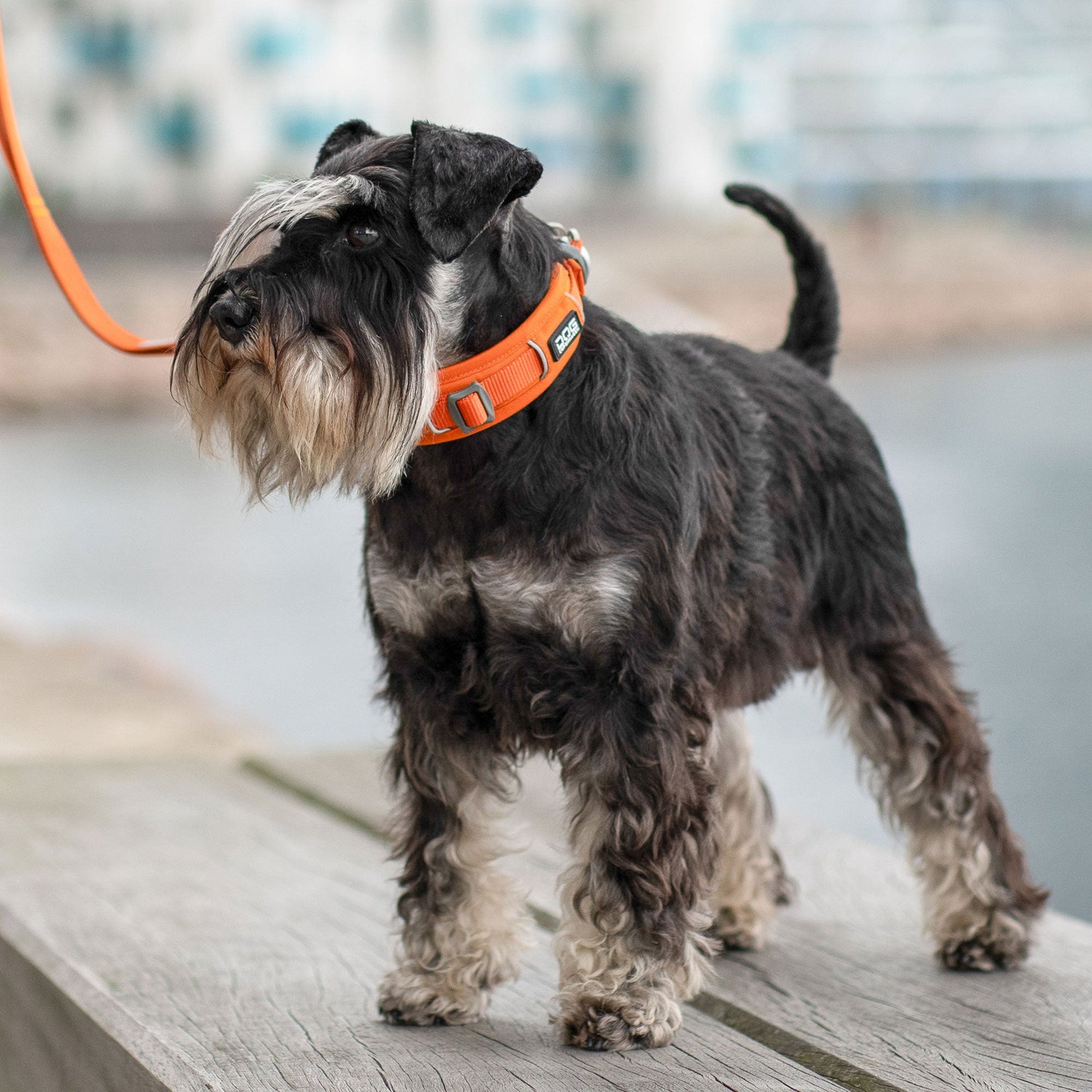
The long line is essential for extending recall distance safely. Attach a 5–10 metre line to your dog's harness (not collar — to avoid neck pressure if they hit the end of the line at speed) and allow them to range ahead on a walk or in a field.
Call the recall. If they come: huge reward. If they don't respond within 2–3 seconds: gently guide them back with the line, no verbal correction, and reward when they arrive — but use a lower-value treat to reflect the aided recall. Never punish a return, even if it was slow or required the line. A dog that returns to punishment learns not to return. The long line phase should be sustained over several weeks across different environments — beaches, parks, forest trails.
Stage 5: Off-Lead in a Safe Environment
Move to off-lead only after your dog is demonstrating reliable recall on a long line in multiple environments with significant distraction. The first off-lead sessions should be in a genuinely enclosed space — a properly fenced field, a tennis court, a secure training area.
Use your highest-value rewards in these early off-lead sessions. Your dog is making a genuine choice to come to you without any physical option to prevent otherwise. Reinforce that choice generously every single time. Gradually extend off-lead recall practice to progressively more challenging environments, and be honest about your dog's current reliability level before removing the safety net.
The Emergency Recall — A Separate, Superpowered Cue
Every dog should have an emergency recall — a distinct cue, different from the everyday recall word, that is charged with the highest-value reinforcement your dog has ever received. This cue is reserved solely for genuine emergencies and is never used casually.
Choose a distinctive word or sound — something you wouldn't say in normal conversation. Train it exactly once per week: call the emergency cue, and when your dog comes, deliver an extraordinary jackpot — multiple pieces of high-value treat, enthusiastic praise, genuine celebration. By keeping this cue rare and always pairing it with the biggest reward you ever deliver, you create a response that is faster and more reliable than the everyday recall — and that retains its power over time because it's never diluted by casual use.
Common Recall Training Mistakes That Set You Back
- Repeating the cue when the dog doesn't respond — this teaches that the cue is optional and a single call doesn't require action
- Calling the dog for something they dislike — bath, nail clipping, the end of the walk — trains avoidance of the recall cue
- Punishing a slow recall — a dog that returns to punishment learns not to return at all
- Moving too quickly through stages before reliability is established at each level
- Using a mediocre treat for a high-level distraction environment — the reward must match the difficulty
Irish-Specific Context: Beaches, Parks, and Countryside
Ireland's terrain creates specific dog recall challenges. Beaches — particularly popular spots like Portmarnock, Brittas Bay, Inchydoney, and Rosses Point in summer — present enormous distraction density: other dogs, children, swimmers, seabirds, and intense smells all competing simultaneously. A dog with a recall that works fine in Phoenix Park or on the Wicklow Way may struggle significantly at a busy beach.
Rural walks in Wicklow, Kerry, and Donegal introduce livestock — particularly sheep — which can trigger a predatory chase response that overrides a trained recall in dogs with high prey drive. If your dog has any tendency toward chasing, the recall must be absolutely solid before off-lead access near farms. Manage environments honestly. A recall that isn't rock-solid yet is a reason to use a long line, not to risk it.
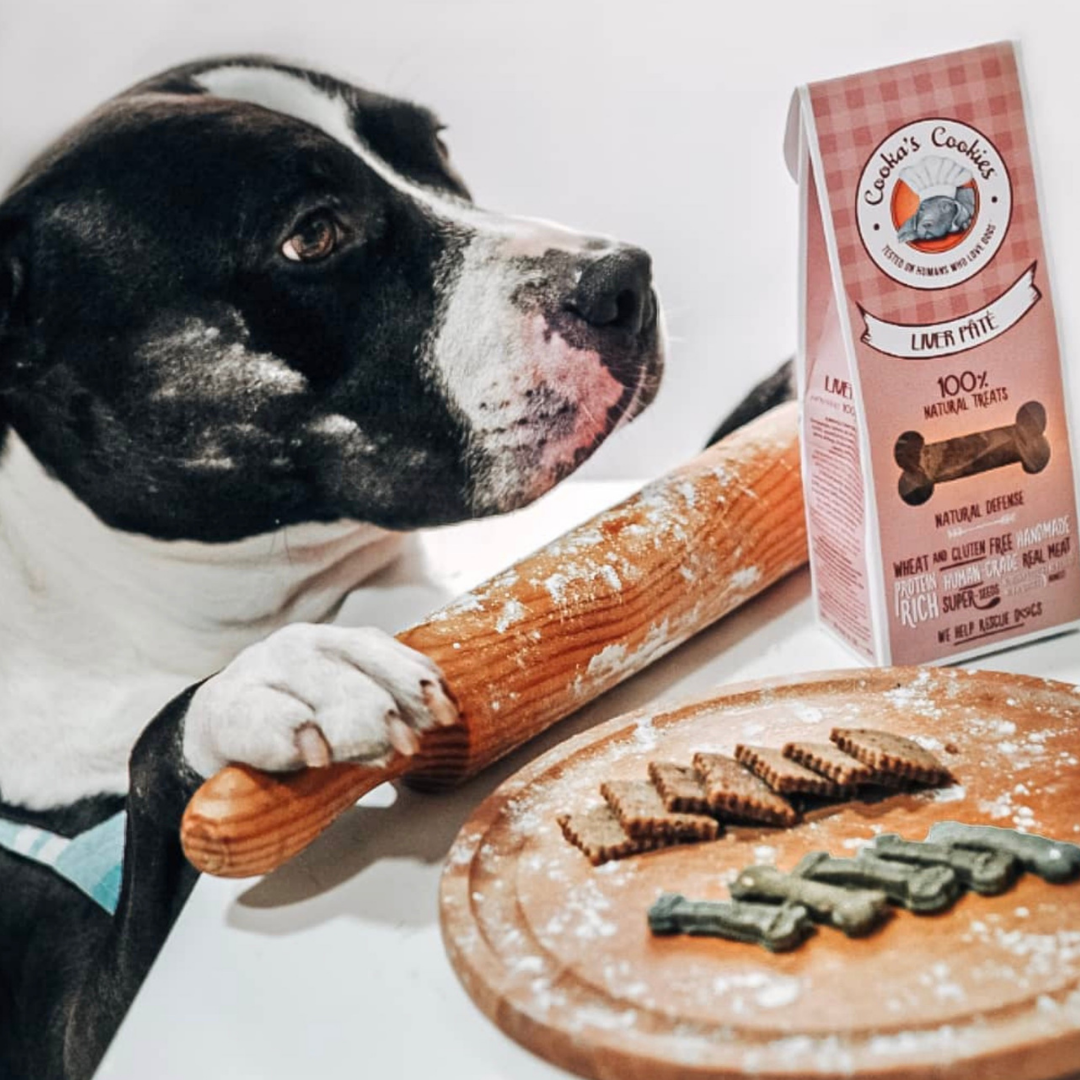
For recall training, Cooka's Cookies Beef Puffs (€5.20) — high-protein, highly aromatic, very low calorie — are the treat to reach for before a session. Cooka's Cookies Tuna Nuggets (€6.35) offer strong fish aroma for dogs who respond better to fish than meat. Browse dog treat bags at dogs-shop.ie.
Frequently Asked Questions
How long does it take to train a reliable dog recall?
For most dogs, consistent daily recall training across 8–12 weeks will establish a solid recall in most environments. High-level reliability in very challenging environments — busy beaches, areas with livestock, off-lead dog parks — takes longer. The timeline depends on how consistently training progresses through the stages and whether the dog has any pre-existing recall problems to undo.
My dog comes back in the garden but not at the park. What am I doing wrong?
Nothing is wrong — you've simply established a garden-level recall and not yet transferred it to the park. The park is a genuinely harder environment. Return to foundation work in the park using your highest-value training treats and a long line. Build reliability at park-level distraction before going off-lead there.
What if my dog already has a bad recall habit?
Start from scratch. Choose a new recall cue — a different word — so you're not fighting the negative history of the old one. Build the new cue from the foundation stage with consistent high-value rewards. Don't use the new cue in situations where failure is likely until reliability is well established.
Is a harness better than a collar for recall training with a long line?
Yes — attach the long line to a harness rather than a collar. If a dog hits the end of the line at speed, a collar attachment puts sudden pressure on the neck and trachea. A harness distributes the force across the chest and back, which is safer and more comfortable during extended recall training sessions.
Where can I buy training treats and recall gear in Ireland?
Dogs Shop Ireland stocks training treats, treat bags, and long lines with nationwide delivery to dog owners in Dublin, Cork, Galway, Limerick, Waterford, Kilkenny, Sligo, Drogheda, Naas, Navan, Ennis, Tralee and all of Ireland. Based in Rathangan, Co. Kildare. Visit dogs-shop.ie.
Scientific References
[1] Herron, M.E. et al. (2009) — 'Survey of the use and outcome of confrontational and non-confrontational training methods in client-owned dogs showing undesired behaviours.' Applied Animal Behaviour Science, 117(1–2), 47–54.
[2] Skinner, B.F. (1938) — 'The Behaviour of Organisms: An Experimental Analysis.' Appleton-Century-Crofts, New York. Foundation text for operant conditioning principles applied in reward-based recall training.
[3] Hiby, E.F. et al. (2004) — 'Dog training methods: their use, effectiveness and interaction with behaviour and welfare.' Animal Welfare, 13(1), 63–69.