
Basic dog commands aren't about control. They're about communication. Teaching your dog sit, stay, down, and come gives you both a shared language - a clear way to tell your dog what you need, and a clear way for them to know what earns a reward. These four skills are the foundation everything else in training builds on.
Done well, with clear criteria and good timing, teaching these is genuinely satisfying. Most dogs enjoy the process once they figure out the game.
Before You Begin
Positive reinforcement means rewarding the behaviour you want. Your dog repeats whatever produces a good outcome, so your job is simple: make the right behaviour produce the best outcome available in that moment.
- Keep sessions short. Five to ten minutes, several times a day. Dogs learn faster in short, frequent sessions than in one long one.
- End on a win. Finish every session on something your dog can do reliably, and reward it generously.
- Say it once. One clear word. Repeating "sit, sit, sit" teaches your dog the cue is optional.
- Match the treat to the task. Save your highest-value treats for new or harder behaviours.
- Never punish a wrong answer. Just withhold the reward and try again. Punishment breeds confusion, not clarity.
Teaching Sit
Sit usually comes first because most dogs offer it naturally. The lure method works well for this stage:
- Hold a small treat between your thumb and fingers, close to your dog's nose.
- Move it slowly back over their head, toward the tail. As the nose follows up and back, the hindquarters drop toward the ground on their own.
- The instant their bottom touches down, say "yes" and deliver the treat.
- Repeat a few times. Once your dog is following the lure reliably, add the word "sit" just before you produce it.
- Fade the lure gradually - first by holding it in a closed fist so your dog responds to the hand signal, then by moving the signal away from the treat entirely.
Common mistake: rewarding before your dog is fully seated, or letting them stand before the treat arrives. Timing is everything here - reward the exact moment the position is right.
Teaching Down
Down is more vulnerable than sit. It puts your dog in a less mobile, more exposed position, so some dogs hesitate at first. That's normal, and it should never be forced.
- Ask for a sit first.
- Hold the treat at your dog's nose, then lower it slowly straight down between their front paws.
- As the nose follows it to the floor, the front legs typically fold and the chest lowers. The moment the elbows touch the floor, reward.
- If your dog stands instead of lying down, go back to sit and try again more slowly. A slight forward movement of the treat as it lowers encourages a fold rather than a step forward.
- Add the word "down" once the movement is reliable, before you produce the lure. Fade it the same way you did with sit.
Never push a dog into position by hand. Dogs forced into a down tend to resist the cue afterward. Luring gets you a dog that chooses to lie down, which holds up far better long-term.
Teaching Stay
Stay is a duration-and-distance behaviour: your dog holds a position while you move away or time passes. Build it in a specific order - duration, then distance, then distraction - and never stack all three at once.
Duration First
- Ask for a sit.
- Wait one second. If your dog holds it, say "yes" and reward.
- Stretch the wait gradually - two seconds, five, ten - rewarding at the end of each successful hold.
- Add the word "stay" once your dog holds a sit reliably for 5 to 10 seconds.
Distance Second
- Once duration is solid, take one step back. Return right away and reward.
- Add distance gradually - two steps, five, across the room - one variable at a time.
- Return to your dog to reward, rather than calling them to you. Returning reinforces the stay. Calling them over teaches them to break it and come forward instead.
Distraction Last
Only add distraction - another person moving, a noise, an outdoor setting - once duration and distance hold up in a quiet space. Stacking all three criteria at once is the single most common reason stay training falls apart. Your dog simply can't manage everything at the same time, and the behaviour breaks down.
Teaching Come (Recall)
Come, at this stage, is a foundation behaviour - the simplest version of recall, designed to build the positive association everything else depends on.
- Say your dog's name. When they look at you, back up a few steps.
- As they move toward you, add the word "come."
- When they arrive, give enthusiastic praise and your highest-value treat.
- Practise in low-distraction spaces first - indoors, then the garden - before trying it anywhere busier.
Never call your dog for something they dislike - a bath, nail clipping, the end of a walk. Every time "come" predicts something unpleasant, it chips away at the association you're building. If you need your dog for something they'd rather avoid, go and get them instead of calling them over. This is just the foundation - for building a recall that holds up at distance and under real distraction, see our Master Perfect Recall article.
What Comes Next
Once all four skills hold up in low-distraction settings, the next phase is transfer: making them work in the real world. Practise in different rooms, then outdoors, add mild distractions, stretch out distance and duration, and slowly cut back how often you reward with food as each behaviour becomes solid.
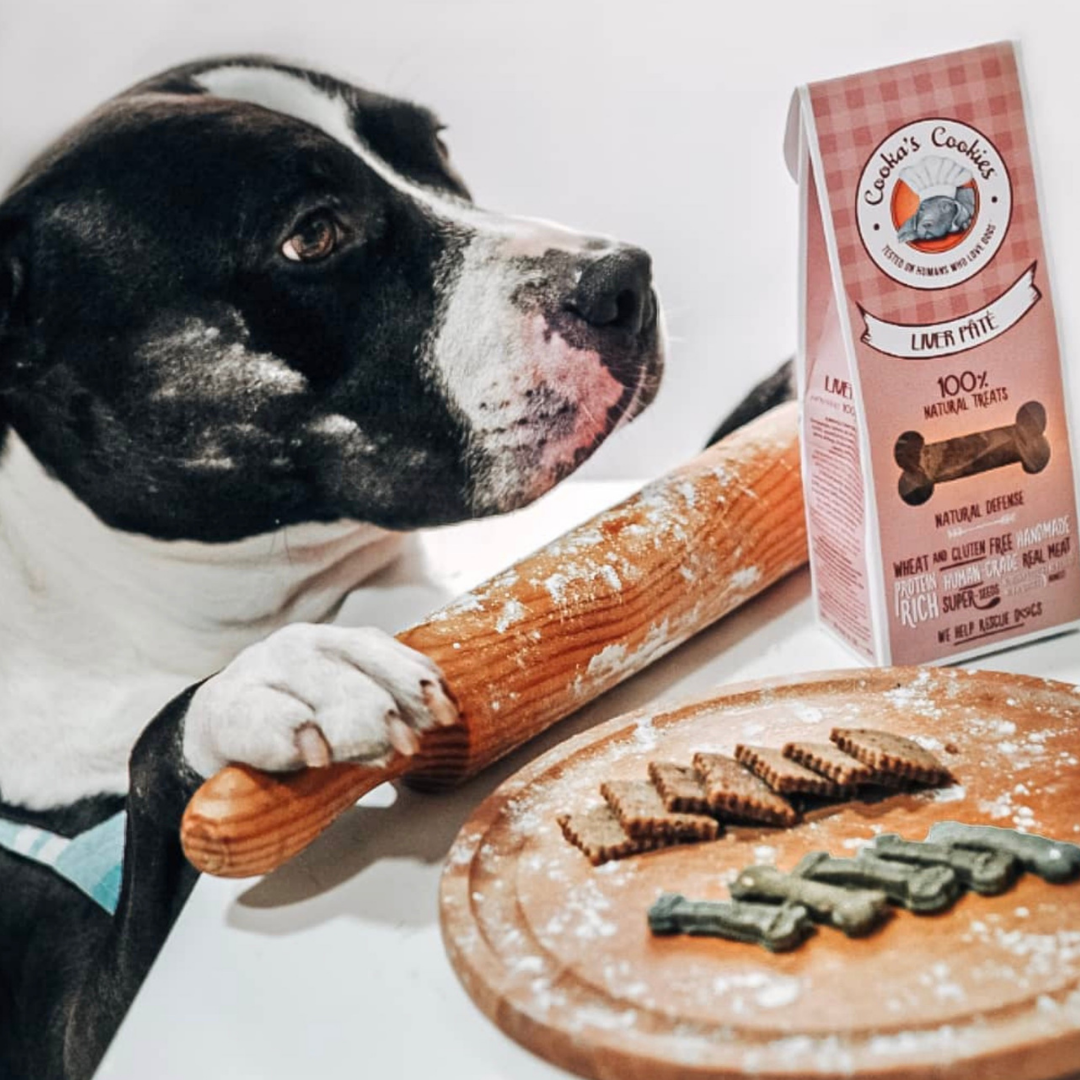
For these foundation sessions, Cooka's Cookies Beef Puffs (€5.20) are high-protein and aromatic enough to work well for new behaviours. Loype Air-Dried Turkey Chunks (€4.50) make a clean, practical everyday reward once a skill is established. A treat bag worn on the hip keeps your timing sharp throughout. If you're building out the rest of your kit alongside these four commands, our guide to dog training gear covers what's actually worth buying.
Common Mistakes and How to Avoid Them
- Training tired or frustrated. Dogs pick up on handler emotion. Short sessions when you're genuinely engaged work far better.
- Raising the difficulty too fast. If your dog is getting it right 70% of the time, you've moved too quickly - aim for 80 to 90% success before progressing.
- Inconsistent words. "Down," "lie down," "get down," and "floor" shouldn't all mean the same thing. Pick one word per behaviour and keep everyone in the house using it.
- Rewarding close enough. Reward what you actually want. If sit means bottom on the floor, don't reward a hover. Clear criteria speed everything up.
FAQ
At what age should I start teaching my dog basic obedience?
From the day they arrive home. Puppies can start learning sit, down, and name recognition from 8 weeks old. Keep sessions very brief for young pups - 2 to 3 minutes at most. The earlier you build positive associations with training, the stronger the foundation for everything after.
How long does it take to teach a dog to sit?
Most dogs pick up the physical movement in a single short session. Reliably responding to the word alone, without a lure, usually takes 3 to 5 sessions over a few days. Full reliability in distracting environments takes longer and depends on how consistently you practise across different settings.
My dog knows these commands at home but ignores them outside. Why?
This is extremely common, and it's called context specificity. Your dog learned the behaviour in one environment and hasn't generalised it yet. Treat outdoor training like starting over in that context - use higher-value treats, lower your expectations at first, and build back up to your usual standard.
Should I use a clicker for basic obedience training?
A clicker gives a precise, consistent marker that can speed up learning. A verbal marker like "yes" or "good" works just as well for most owners. Either is fine - consistency matters more than which one you pick.
Where can I buy training treats and gear in Ireland?
Dogs Shop stocks training treats, treat bags, and training gear, with nationwide delivery to Dublin, Cork, Galway, Limerick, Waterford, Kilkenny, Sligo, Drogheda, Naas, Navan, Ennis, Tralee, and the rest of Ireland. Based in Rathangan, Co. Kildare - visit dogs-shop.ie.
Once these four commands are solid, the rest of training gets a lot easier - browse the full training gear range to keep building from here.