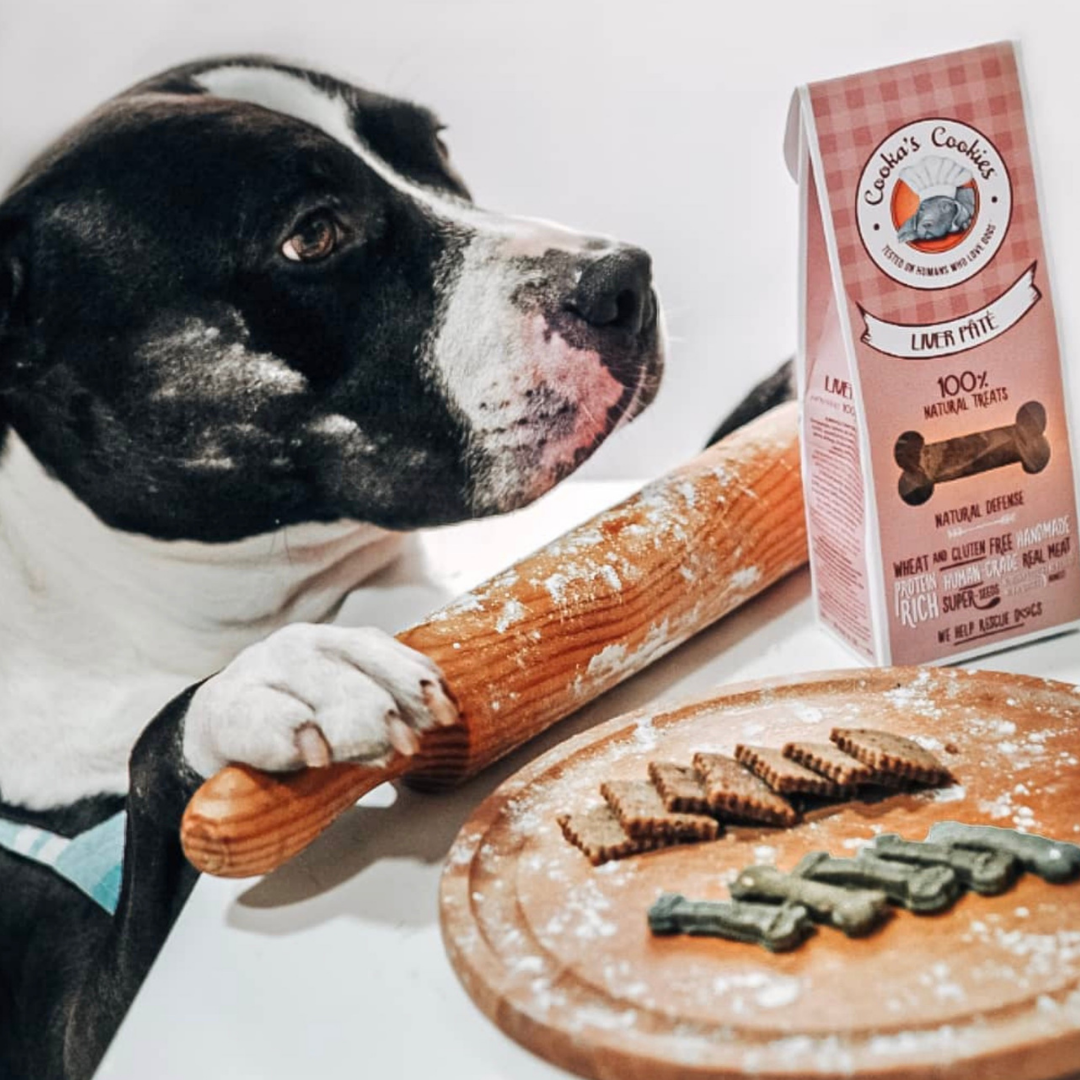

Ask most owners what organ treat their dog eats and the answer is almost always liver. Ask why, and it's usually "it's good for them" - true, but only part of the picture. Liver, heart, kidney, and lung each have a genuinely different nutritional profile, a different safe feeding limit, and a different job to do in your dog's routine. Getting familiar with the differences means you're choosing on purpose, not just by habit.
Why Organ Meats Matter
Dogs are built to extract nutrition from animal tissue efficiently, and organ meats are some of the most bioavailable sources of vitamins, minerals, and amino acids around. In a raw or BARF diet, organ meat typically makes up around 10 to 15% of total food volume. Commercial diets usually contain far less, which is part of why single-ingredient organ treats do a genuinely useful job as a supplement rather than just a snack. For more on what separates a genuinely useful treat from filler, see our guide on what makes a quality natural dog treat.
The distinction worth understanding upfront: not every organ can be fed in the same quantity. Liver, in particular, contains nutrients that turn harmful in excess. Lung and heart can be fed far more freely.
Liver: The Most Nutritious, and the One With a Real Limit
Liver is the most widely available organ treat, and for good reason. It's one of the richest natural sources of vitamin A, vitamin B12, iron, copper, zinc, and folic acid. Gram for gram, little else comes close.
The catch is vitamin A. Liver contains high levels of retinol, and unlike the beta-carotene found in plants, retinol can build up to harmful levels over time if fed in excess. The figure most commonly cited is that liver shouldn't exceed 5% of a dog's total daily diet, and excess intake is linked to a condition called hypervitaminosis A, which can cause bone and joint problems.
As an occasional high-value treat, liver is excellent. As a daily high-volume reward, it needs a bit more care.
Heart: Technically Muscle, and One of the Safest Choices
Despite usually being grouped with organ meats, heart is technically a muscle. It's the hardest-working muscle in the body, which gives it a nutritional profile closer to red meat than to a secreting organ like liver or kidney.
Heart is rich in taurine, an amino acid essential for cardiac function that isn't always well represented in processed dog food. It's also high in CoQ10, B vitamins, and iron, and lower in fat than many muscle cuts. It doesn't carry liver's vitamin A concern, so it can be fed more freely.
For training, heart is genuinely practical. It's palatable, aromatic, and protein-dense, and it holds up at higher volumes without the same accumulation worries as liver. Air-dried beef heart in particular has a firm, low-moisture texture that's easy to portion and carry.
Kidney: Strong Flavour, Moderate Limits
Kidney is a secreting organ, actively filtering substances in the body, which gives it a different profile to heart. It's rich in vitamin B12, riboflavin, iron, and selenium, and like liver, it carries moderate vitamin A levels, though generally lower than liver itself.
The flavour is strong and distinctive, more pungent than liver, well beyond heart. That intensity is exactly why most dogs find it so motivating, and it's useful when you need a treat that cuts through a genuinely distracting environment.
Treat kidney similarly to liver on daily limits: keep it under 5% of total intake and rotate it rather than using it as your only reward.
Lung: The Everyday Training Treat
Lung behaves differently from the other three, not because it's nutritionally inferior, but because it isn't a secreting organ and doesn't carry the vitamin accumulation risk of liver or kidney. It's extremely high in protein (typically 69 to 72% crude protein by dry weight), very low in fat and calories, and can be used generously.
For everyday training, lung sits in a spot none of the other three quite reach - you can use it at the volume real training sessions demand, multiple rewards a minute in places, without tracking a limit. We've covered lung treats specifically, including how to use them for training, in a full lung treats guide.
One texture note: dried lung is crunchy and firm, so it needs proper chewing. Size pieces appropriately to prevent gulping, and start smaller than you think you need.
Side-by-Side Comparison
- Liver: highest vitamin A and B12, richest micronutrient profile, strong flavour. Limit to 5% of daily diet. Best as an occasional high-value reward.
- Heart: muscle meat profile, high taurine and CoQ10, moderate flavour. No strict upper limit beyond general treat guidelines. Strong everyday training treat.
- Kidney: strong flavour and aroma, high B12 and selenium, moderate vitamin A. Treat like liver for daily limits. Effective in high-distraction environments.
- Lung: highest protein by weight, very low fat and calorie. Most generous daily limits of the four. Best for high-volume training sessions.
Why Rotation Matters
No single organ covers everything. Liver leads on vitamin A and B12. Heart leads on taurine. Kidney contributes selenium and riboflavin. Lung provides volume-friendly protein. Rotating across all four gives your dog a broader nutritional contribution than sticking with one alone.
Rotation also helps in training. A dog who gets the same treat every session tends to get a little less responsive to it over time. Cycling between the four keeps the reward less predictable, and therefore more motivating.
FAQ
Can I give my dog organ meat treats every day?
Lung and heart can be given daily within standard treat guidelines (no more than 10% of daily calories from treats). Liver and kidney are better used a few times a week in modest portions, to avoid a build-up of fat-soluble vitamins, particularly vitamin A.
Which organ meat is best for training treats?
Lung is the most practical for high-volume training, given how low it is in fat and calories and how freely you can use it. Heart is a close second for everyday use. Liver and kidney work well as high-value jackpot rewards used selectively.
Are organ meat treats suitable for puppies?
Yes, at appropriate portions. Liver is particularly useful for puppies given its iron and B12 content, but the same limits apply - small amounts, not daily at high volume. Lung and heart are the safer everyday options thanks to their more generous limits.
Where can I buy organ meat treats in Ireland?
Dogs Shop stocks single-ingredient organ meat treats with nationwide delivery to Dublin, Cork, Galway, Limerick, Waterford, Kilkenny, Sligo, Drogheda, Naas, Navan, Ennis, and Tralee. Based in Rathangan, Co. Kildare - visit dogs-shop.ie.
Can organ meat treats cause vitamin A toxicity?
Only if liver, and to a lesser extent kidney, is fed in consistently large amounts over an extended period. Occasional use or modest daily amounts pose no meaningful risk. Lung and heart carry no vitamin A concern at any normal feeding level.
Ready to build a rotation? Browse the full range of organ meat treats and mix in what your dog's missing.