
Most dog training gear promises to transform your dog. Most of it doesn't need to be there. Effective training actually runs on a short list of items, and each one earns its spot for a specific reason. This guide walks through the dog training gear that's worth buying, what to skip entirely, and where to start if you're building a kit from scratch, whether that's basic obedience, recall work, or something more specialised like dummy training.
Training Treats: The One That Actually Matters
If you buy one thing well, make it the treats. More than the lead, the harness, or any gadget, treat quality decides whether your dog wants to work and whether training actually holds up outside the garden.
A good training treat is small enough to deliver fast, smells strong enough to compete with a distracting environment, and is worth more to your dog than sniffing the ground. Most commercial biscuits fail on all three counts. They're too big, too bland, and too close to what's already in the food bowl to feel like a real reward.
High-Value Treats for the Hard Moments
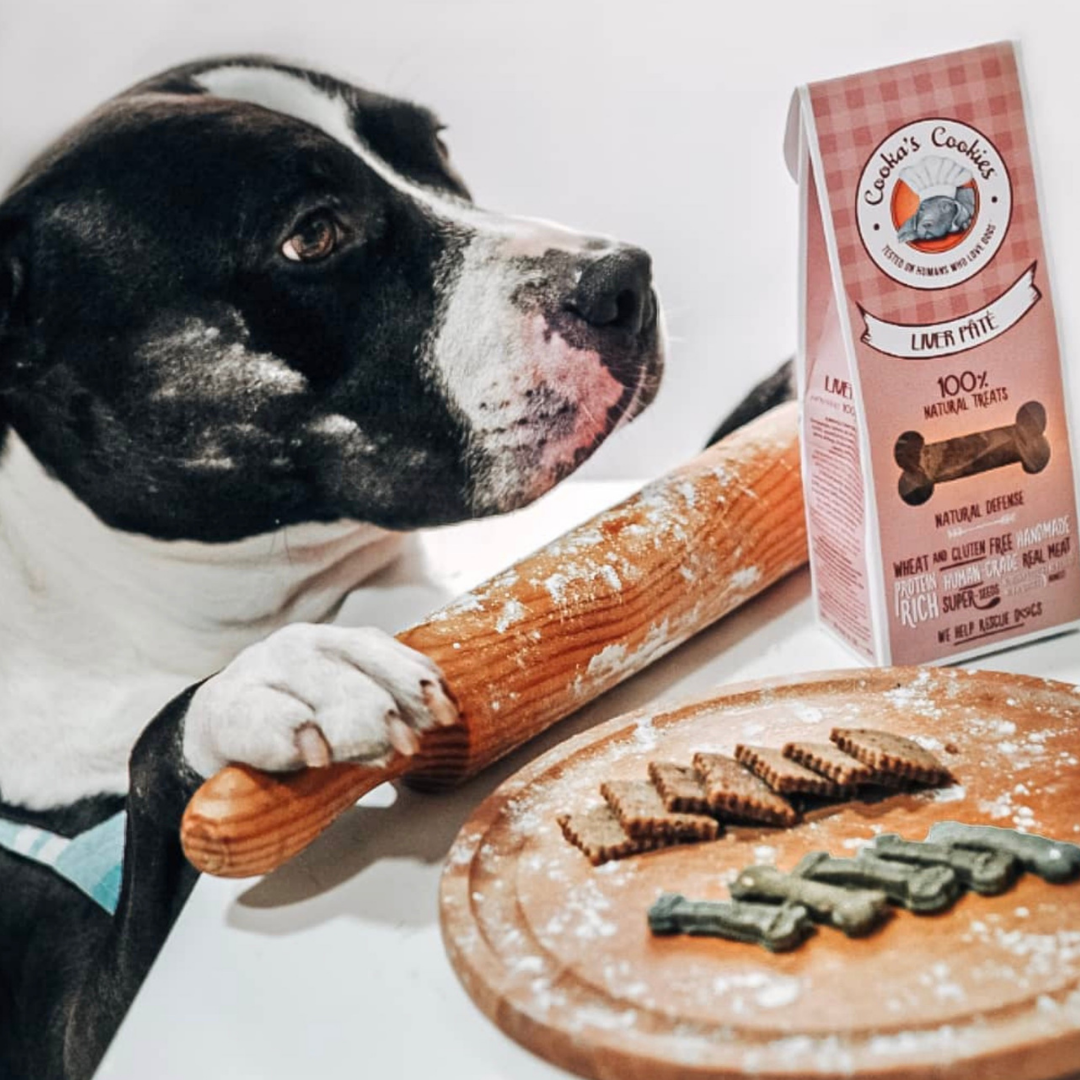
Keep these for the toughest behaviours and the most distracting environments. Cooka's Cookies Beef Puffs (€5.20) - single-ingredient air-dried beef lung, 69% protein - work for most dogs in most contexts. Cooka's Cookies Tuna Nuggets (€6.35) bring a stronger fish aroma for dogs that respond better to fish than meat. For the genuinely hard moments - an emergency recall, a first breakthrough - Cooka's Cookies Gone Fishing (€5.68), pure dried fish skin, is the one to hold in reserve.
Everyday Treats for the Bulk of Your Sessions
For the repetitions that make up most of a training session - loose-lead work, regular obedience, rewards on a walk - you don't need the jackpot treat every time. Loype Air-Dried Turkey Chunks (€4.50) are single-ingredient, gentle on most dogs including those sensitive to beef, and priced for daily use without blowing through your dog's calorie budget.
The Treat Bag
Skip this and you'll pay for it in timing. The gap between your dog doing the right thing and getting the reward is what actually shapes the behaviour, and fumbling in a coat pocket adds a delay that blurs the message - especially early on, when timing matters most.
A bag worn on the hip keeps the reward within reach. Look for one that opens one-handed, since your other hand is usually holding a lead, closes securely so treats don't spill everywhere, and wipes clean after the more aromatic treats have their way with it. Browse the dog treat bag range at Dogs Shop.
The Long Line
A long line - a lightweight 5 to 10 metre lead - is one of the most underused pieces of kit out there. It lets you practise recall, distance stays, and retrieve work in open spaces before your dog is reliably off-lead.
It keeps things safe while letting you train at real-world distances. That's how a recall actually gets built - not by hoping it transfers straight from the garden to a beach in Wexford with no steps in between. Browse long lines and training leads, and clip it to a harness rather than a collar, so a hard hit at the end of the line doesn't land on your dog's neck. For more on why fixed lines beat the retractable kind, see our full lead guide.
The Harness
A well-fitted harness changes how training goes, not just how a walk feels. One that rides up into the armpits or restricts the shoulders creates discomfort, and a dog that's uncomfortable is harder to train, full stop. A properly fitted harness leaves the shoulders free, spreads lead pressure across the chest and back, and stays put during activity.
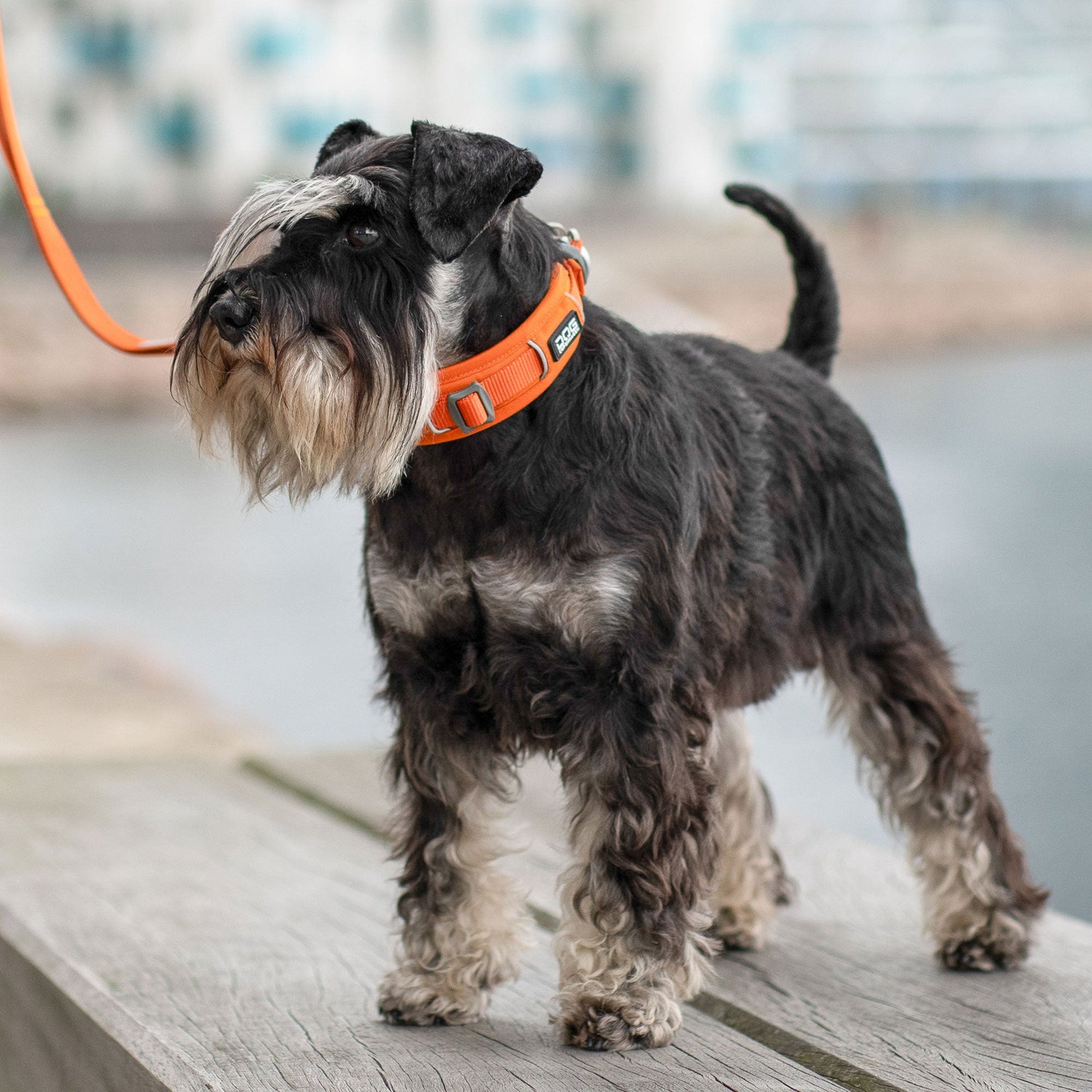
For loose-lead work specifically, a front-clip harness reduces pulling force and makes the whole process easier. The dog harness range at Dogs Shop includes DOG Copenhagen designs built for different body types. If you're weighing up collar versus harness for training generally, this comparison covers it in more depth.
Tug Toys and Training Dummies
Two more pieces earn a place in a serious kit, though neither is essential for basic obedience.
A tug toy rewards the more physically demanding work - a solid recall from a distance, a fast retrieve, a precise heel - and builds engagement in dogs that aren't strongly food-motivated. We've covered how to use one properly, and which type suits which dog, in a full guide to dog tug toys.
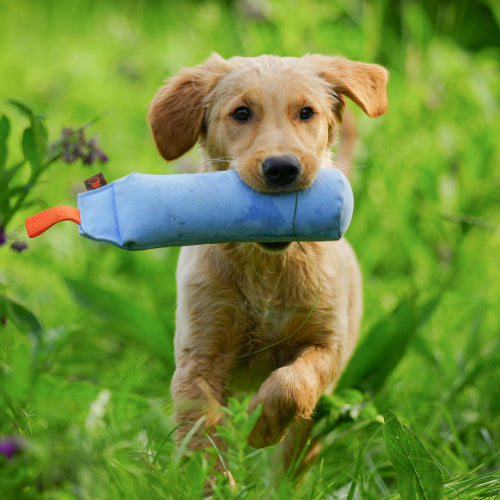
Training dummies belong in the kit if you've got a retrieving breed - Labrador, Spaniel, Vizsla, or similar - since they channel natural carry drive into structured work. We go into sizing, types, and how to introduce one in our dedicated dummy guide.
What You Don't Need
- Clickers: a precise marker, but a verbal "yes" does the same job and you never forget to bring it. Not essential - consistency matters more than the tool.
- Electronic training collars: not appropriate for pet dog training. Positive reinforcement gets more durable results without the welfare and relationship cost.
- Retractable leads: they teach pulling rather than fixing it. Avoid these during any lead training work.
- Head halters: can reduce pulling, but need a slow, careful introduction to avoid your dog associating them with something negative. Not a first choice while positive methods are still on the table.
Where to Start
- High-value treats - the single biggest variable in reward-based training
- Treat bag - what makes fast, clean reward timing possible
- Well-fitted harness - the foundation for comfortable on-lead work
- Long line - for recall work and a safe path to off-lead trust
- Everyday treats - for the bulk of your regular sessions
- Tug toy - once the basics are in place
- Training dummies - for retrieving breeds or owners building out retrieve work
Start with the fundamentals. A dog trained consistently with good treats and a treat bag will outperform a dog with a shelf full of gadgets and no consistent reward system behind them.
FAQ
What equipment do I need to start dog training?
High-value treats and a treat bag for fast access cover the essentials. A well-fitted harness and a long line for recall work come next. Tug toys and dummies are worth adding once the basic obedience foundation is in place.
Do I need a clicker for dog training?
No. A verbal marker like "yes" or "good" works just as well and has the advantage of always being on hand. If you already use a clicker consistently, keep going. If you're starting fresh, a verbal marker is one less thing to carry.
What treats work best for dog training in Ireland?
High-protein, single-ingredient, strongly aromatic treats consistently outperform commercial biscuits. Aroma matters most - something like beef puffs or fish skin treats cuts through distraction in a way milder treats can't. Use different value levels for different challenges.
Where can I buy dog training gear in Ireland?
Dogs Shop stocks training treats, treat bags, leads, harnesses, tug toys, and training dummies, with nationwide delivery to Dublin, Cork, Galway, Limerick, Waterford, Kilkenny, Sligo, Drogheda, Naas, Navan, Ennis, Tralee, and the rest of Ireland. Based in Rathangan, Co. Kildare - visit dogs-shop.ie.
How do I know which training reward is right for my dog?
Try a few types in a low-distraction setting and watch how your dog responds - speed, enthusiasm, and how long the interest holds are the tells. Whichever gets the fastest, most enthusiastic response is your highest-value reward. Save it for your hardest challenges and use lower-value treats for behaviours your dog already has down.
Ready to put a kit together? Browse the full dog training gear range and start with the essentials above.