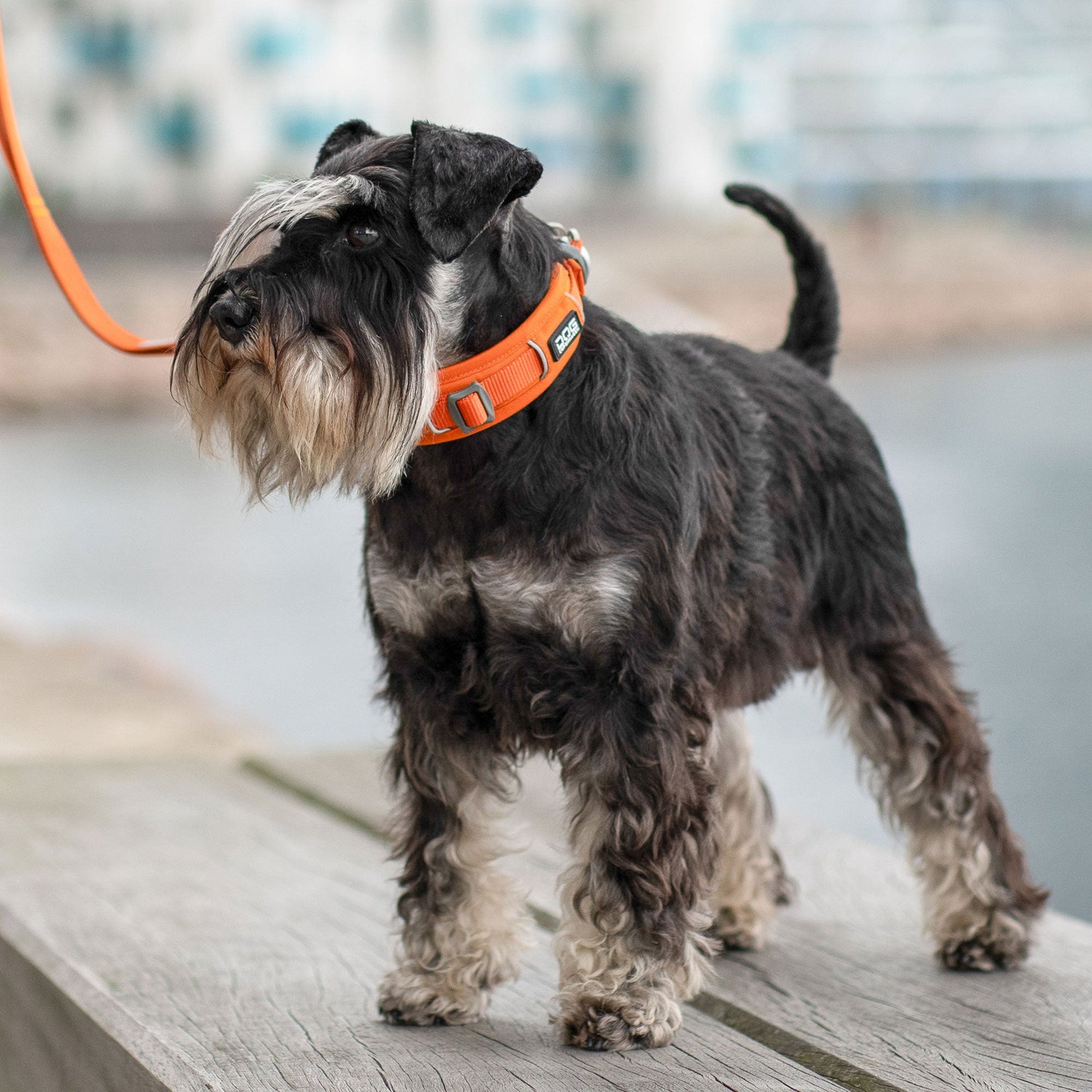

5 Heartbreaking Signs Your Dog Is Desperately Bored
Share
The chewed skirting board. The bin upended for the third time this week. The barking at absolutely nothing for twenty relentless minutes. You've walked your dog, fed your dog, and you genuinely cannot work out what the problem is.
Here's the hard truth: your dog may be suffering from boredom right now, today, in your home. Not from lack of love. Not from lack of walks. From a working brain that has nothing meaningful to work on. For dog owners across Ireland, this is one of the most commonly misunderstood welfare issues. A bored dog is not a bold dog — it is a cognitively under-stimulated dog. And the fix is consistent, supervised mental enrichment through quality interactive dog toys and high-value natural treats.
Sign 1: Destroying Things They've Never Touched Before
This is the number one sign of canine boredom across Ireland and beyond. A pillow your dog has ignored for two years. A skirting board. A kitchen chair leg. The randomness is the tell — a dog destroying a variety of previously untouched items is a brain searching for stimulation, not a dog with a behaviour problem.
A 2016 review in Veterinary Medicine Today confirmed that supervised food-puzzle toys significantly reduced destructive behaviour in dogs. The mechanism is simple: the brain needs something to do. Punishment redirects nothing — enrichment solves it at the source.
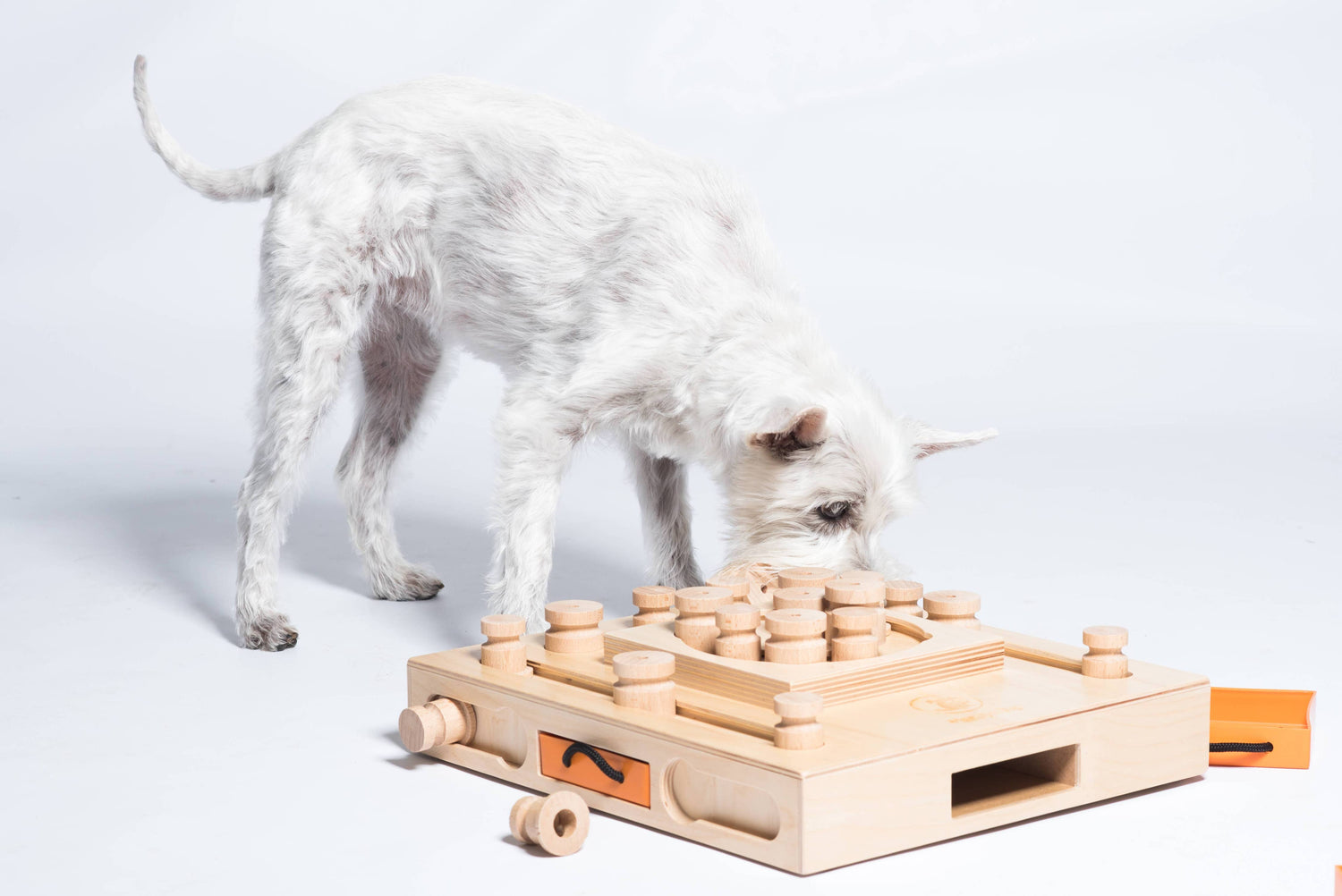
Redirect now: Air-Dried Turkey Chunks (€4.50) (broken to puzzle size) in a My Intelligent Dogs wooden puzzle feeder. Sit with your dog throughout the supervised session. The turkey's warm, distinctive scent holds attention powerfully through every compartment.
Sign 2: Barking or Whining at Absolutely Nothing
Barking at the postman has a cause. Barking at the wall for twenty minutes does not. Purposeless vocalization is one of the most consistent markers of chronic under-stimulation in dogs.
Research across multiple studies confirms that increasing cognitive challenge through interactive dog toys and supervised enrichment reduces this behaviour measurably within one to two weeks. Before trying any corrective approach, significantly increase your dog's daily mental stimulation and observe the result. The improvement is often startling.
Sign 3: Hyperactivity That Never Settles After Exercise
If your dog sprints the entire walk, crashes for 20 minutes, and then immediately bounces off the walls again — their arousal regulation system has no effective brake. Walking faster or further won't fix this. Cognitive enrichment will.
Dogs who receive regular supervised mental stimulation alongside physical exercise show significantly lower baseline arousal. They settle more readily, respond better to cues, and are genuinely easier to live with. After a supervised puzzle session, close with Lamb Bites — Merino Bites (€5.00) on their bed to signal the transition from working to resting.
Sign 4: Obsessive Repetitive Behaviours
Pacing the same route around the garden. Spinning before lying down. Chasing shadows obsessively. These repetitive motor patterns signal that your dog's brain is generating its own stimulation because nothing else is providing it.
Research published in Applied Animal Behaviour Science found that structured cognitive enrichment reduced these patterns significantly in dogs within weeks. The key word is structured — a supervised puzzle session with natural treats, at the same time each day with the same cue, gives the brain a reliable, positive outlet.
Sign 5: Velcro Behaviour — Glued to Your Side, Distressed Without You
A dog who cannot settle unless touching you, follows you from room to room, and becomes visibly distressed when you leave has often exhausted their own internal cognitive resources. This is also the clearest early warning sign of developing separation anxiety.
Supervised interactive dog toy sessions build your dog's capacity for independent focus. The puzzle session itself — where you are present and supportive but the dog is working — develops exactly the right cognitive independence over time.
Try: Salmon & Lamb Bites — Buzzy Snack (€3.00) in a Level 1 wooden puzzle. Sit with your dog throughout the supervised session, encourage verbally, and celebrate every compartment solved. Start close and build confidence gradually.
How to Fix Dog Boredom: The Practical Plan
- 3–5 supervised puzzle sessions per week. Load a My Intelligent Dogs wooden puzzle with single-ingredient natural treats, sit with your dog throughout, and use the same cue at the same time each day for routine.
- Choose single-ingredient, animal-origin natural treats. Real food smell drives real motivation. The quality of the natural treat directly determines the quality of your dog's engagement.
- Match difficulty carefully. Too easy produces boredom; too hard produces frustration. Supervise every session to read your dog's signals accurately and adjust in real time.
- Close every supervised session with a natural long-lasting chew. For strong chewers: Beef Shoulder Blade (€12.90). For moderate chewers: Beef Sticks — Mac Sausage (€10.60). Always supervise chewing. It teaches your dog that enrichment ends with calm, settled, independent rest.
- Track the change. After two consistent weeks, review the five signs above. Dog owners across Ireland consistently report measurable improvement in all five within 10–14 days of daily supervised enrichment.
Frequently Asked Questions
My dog gets walks every day. Why is it still destroying things?
Physical exercise and mental stimulation are distinct needs. A walk exercises the body and delivers sensory input, but rarely provides the sustained problem-solving challenge that tires a dog's brain. A cognitively under-stimulated dog will redirect restless mental energy into destructive behaviour regardless of physical exercise. Supervised interactive dog toy sessions with natural treats 3–5 times per week alongside regular walks typically resolves this within two weeks.
Should I always supervise my dog during puzzle toy sessions?
Yes, always. Every interactive dog toy session must be fully supervised. Sit with your dog, encourage them verbally, guide them when they get stuck, and step in immediately if frustration builds. Supervision makes every session safer and significantly more effective. Never leave your dog alone with a puzzle toy, snuffle mat, or any interactive feeder.
How quickly will I see results from increasing mental stimulation?
Most dog owners in Ireland report noticeable improvement within 7–14 days of consistent supervised enrichment. Destructive behaviour and hyperactivity tend to improve first. Velcro behaviour and compulsive patterns typically take three to four weeks of consistent supervised practice before independent settling becomes the dog's new default.
Are certain breeds more prone to boredom?
Working breeds, herding breeds, and scent hounds tend to have higher baseline needs for cognitive stimulation due to selective breeding for specific tasks. Border Collies, German Shepherds, Spaniels, and Labradors are among the most commonly affected in Ireland. But boredom is not exclusive to high-drive breeds — any dog with an active mind and insufficient cognitive challenge will eventually show these signs. We serve dog owners across Dublin, Kildare, Meath, Wicklow and all of Leinster from our Rathangan shop at Dogs-shop.ie, with fast nationwide delivery on all orders.
Scientific References
[1] Veterinary Medicine Today (2016) — Review examining the impact of food-puzzle toys on boredom-driven behaviours. Found significant reduction in destructive chewing, excessive barking, and restlessness with consistent supervised puzzle enrichment.
[2] Applied Animal Behaviour Science (2004) — Schipper, L.L. et al. Study finding that structured cognitive enrichment significantly reduced repetitive motor patterns and passive behaviours in dogs within weeks of introduction.
[3] Journal of the American Veterinary Medical Association (2002) — Overall, K.L. & Dunham, A.E. 'Clinical features and outcome in dogs and cats with obsessive-compulsive disorder.' JAVMA, 221(10), 1445–1452.